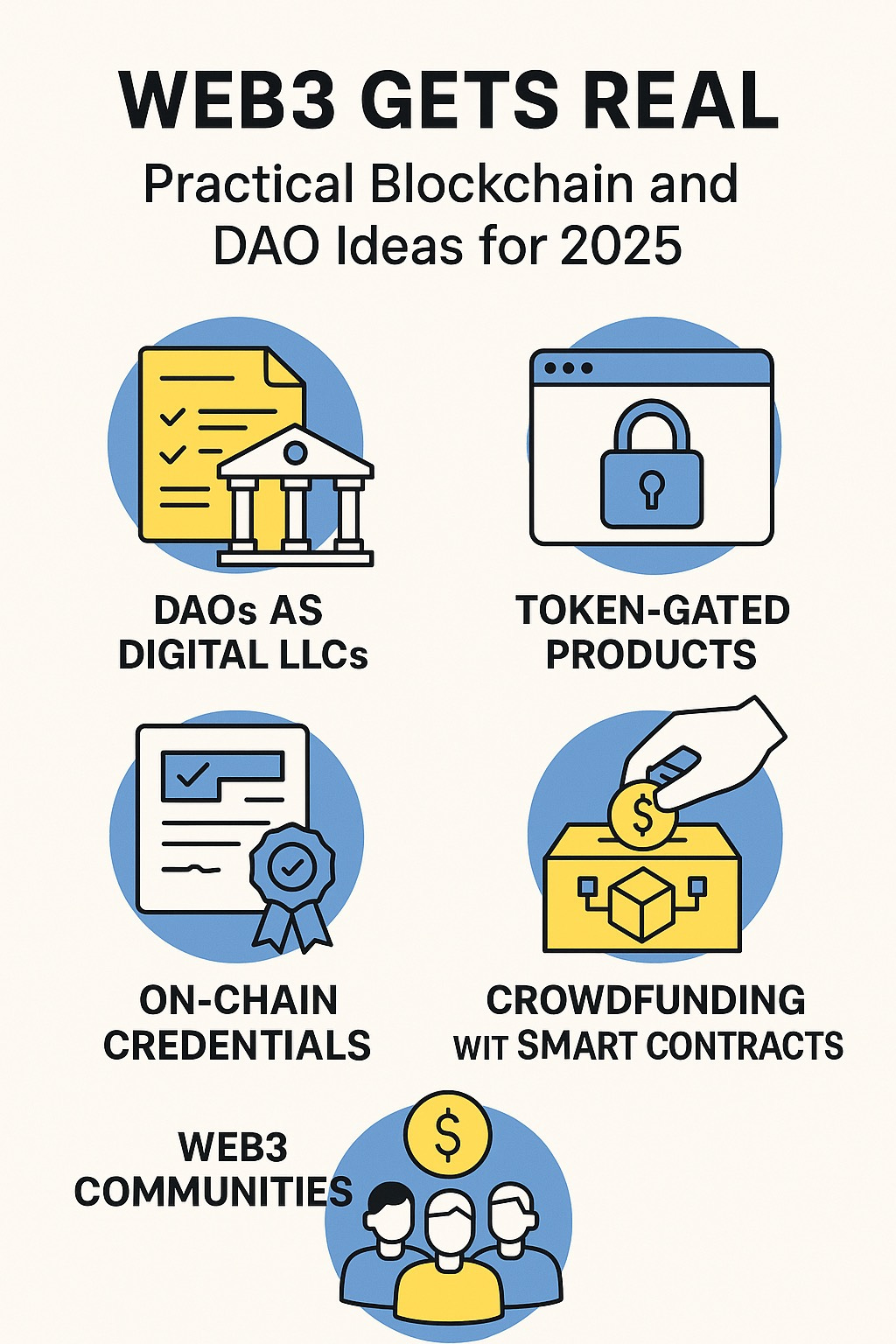
Web3 Gets Real: Practical Blockchain and DAO Ideas for 2025

The Web3 hype may have cooled off, but make no mistake — it didn’t die. It evolved.
After the NFT crash and crypto winter, many wrote off blockchain as a trend that fizzled. But under the radar, real applications are being built — not to disrupt the world overnight, but to quietly change how we collaborate, fund, and create.
2025 is proving to be the year Web3 gets practical. Less hype, more utility. Let’s unpack what that looks like.
1. DAOs Are Quietly Becoming the New Digital LLCs
Decentralized Autonomous Organizations (DAOs) are no longer “internet co-ops” with chaotic Discords and meme coins. They’re becoming structured, legally compliant vehicles for:
Global creator collectives
Investor syndicates
Research communities
Micro startup studio
Why it’s working:
DAOs allow global contributors to vote, propose, and earn – without setting up a traditional business. Platforms like Aragon, Tally, and JokeDAO now make coordination easier than ever.
Practical use case:
A group of indie hackers pools funds to build and maintain open-source AI tools — governed by DAO proposals and compensated in crypto or stablecoins.
2. Token-Gated Products Are Replacing Logins
Forget logins and email signups. Token-gated access is redefining SaaS onboarding. Want access to a private product, community, or dataset? Just connect your wallet and verify ownership of a specific token.
Examples in 2025:
Private UX tools for Figma plugin holders
AI tools accessible only to NFT pass owners
Marketplaces where ownership = access
Why it matters:
No passwords. No subscriptions. Just permissionless access based on ownership. It’s product as a protocol — and startups are building closed ecosystems around it.
3. On-Chain Credentials > LinkedIn Badges
Traditional resumes are flawed: unverifiable, outdated, and hard to trust. That’s why Web3 teams are moving toward on-chain credentials — skill proofs, project contributions, and verifiable work history stored immutably on blockchain.
You can already:
Verify GitHub commits via GitPOAP
Issue learning credentials via TalentLayer
View contributor scores on Showkarma
Why it’s engaging:
It’s transparent. It rewards real contribution. And it opens hiring pipelines globally, without central gatekeepers.
4. Crowdfunding Gets a Makeover with Smart Contracts
Kickstarter is great — until you realize you’re trusting a platform. Smart contract-based crowdfunding flips the model:
Contributors only pay if goals are met
Rules are encoded in transparent contracts
Projects are accountable to their funders
Check out platforms like Juicebox and Mirror. They’re enabling creators and builders to raise capital directly, without relying on middlemen — and with tokens that grant real influence or rewards.
5. Web3 Communities Are Earning Together
In 2025, we’re seeing a clear shift:
From “audience” to “owners.”
Creators and builders are forming protocol-native communities where members don’t just cheer from the sidelines — they share in upside.
Real-world examples:
A UI design community where token holders vote on Figma templates to ship (and split earnings)
A blockchain-based music label where fans invest in artists early and earn royalties
A newsletter DAO where every contributor earns from the subscription revenue pool
Web3 is becoming less about speculation and more about collaborative value creation.
So, What Should You Build?
If you’re a founder or designer thinking of dipping into Web3, here are 3 practical project ideas:
🔹 A token-gated SaaS tool for niche audiences (e.g. designers, AI devs)
🔹 A skill-verification DAO that curates talent pools for startups
🔹 An NFT-backed license model for premium UI kits, icons, or content libraries
The key? Solve a real problem. Use blockchain only where it improves trust, ownership, or coordination.
Closing Thoughts
Web3’s early phase was about hype.
This next phase? It’s about infrastructure and ownership.
Ignore the buzzwords. Focus on the friction points. The best Web3 builders in 2025 are using blockchain where it matters most — quietly redefining how we work, fund, and create together.
P.S.
Are you building or brainstorming something in the Web3 space? Drop a reply or leave a comment — I’d love to feature a few real indie projects in a future edition.